
5 Ways to Help Your Child Develop Resilience
Resilience is more than just “toughness.” It’s the ability to bounce back from setbacks, adapt in the face of challenges, and keep moving forward with confidence. Helping children develop resilience is one of the greatest gifts a parent or caregiver can give, and research shows that supportive adult relationships are a key factor. As Columbia University Department of Psychiatry notes:
“For kids, an extremely important resilience factor is a warm, nurturing relationship with a parent, caregiver, or other adult.” (columbiapsychiatry.org)
Whether your child is exploring dance, gymnastics, ninja-style classes, or everyday challenges, these five strategies can help them grow stronger, more confident, and better equipped to navigate life’s ups and downs.
1. Cultivate a Warm, Nurturing Relationship
At the heart of resilience lies connection. The Columbia study shows that children with at least one positive, committed adult relationship are significantly less likely to experience depression, anxiety, or chronic stress — even when facing adversity.
Practical ways to build connection:
- Dedicate regular one-on-one time to check in about feelings, goals, and experiences. Even 10–15 minutes of focused attention matters.
- Listen actively and validate emotions: “It’s okay to feel frustrated when a new dance move doesn’t go perfectly.”
- Offer consistent support, both during successes and setbacks, reinforcing that your child is valued no matter the outcome.
Strong, nurturing bonds give children a secure base from which to explore challenges, take risks, and recover from setbacks.
2. Teach Problem-Solving Skills
Resilience grows when children learn to tackle challenges independently. Instead of immediately providing solutions, guide them to think critically and explore options. This fosters a sense of capability and self-confidence.
How to put this into practice:
- Pose open-ended questions: “What approach could you try next?” or “How could you solve this problem differently?”
- Encourage brainstorming multiple solutions — for example, how to organize a research project, solve a math problem, or write an essay.
- Celebrate creative approaches and effort, not just the correct outcome, to reinforce learning and flexibility.
By practicing problem-solving, children develop self-reliance, creativity, and persistence — all essential elements of resilience.
3. Offer Age-Appropriate Academic Challenges
Facing challenges is central to resilience. Providing manageable, structured academic obstacles helps children learn perseverance, problem-solving, and self-confidence.
Ways to encourage healthy challenges:
- Introduce incremental goals: completing a more complex reading assignment, mastering a difficult math concept, or conducting a small research project.
- Support repeated attempts and revision — emphasize progress rather than perfection.
- Reflect on each experience: “You didn’t get the answer right the first time, but you improved from last time. What strategy helped?”
Controlled, achievable challenges allow children to experience both effort and reward, teaching them that persistence pays off.
4. Promote Healthy Risk-Taking
Resilience also develops when children step outside their comfort zone in safe, structured ways. Experiencing controlled risks teaches them how to manage fear, uncertainty, and setbacks.
Ways to encourage healthy risk-taking:
- Let your child choose new experiences, like climbing a tree, jumping off on obstacle, or trying to balance on obstacles at the playground.
- Provide guidance and safety without taking over the challenge, allowing your child to navigate the process themselves.
- Celebrate attempts, not just successes — recognize courage and effort as achievements in their own right.
Healthy risk-taking shows children that setbacks are part of growth and reinforces their belief in their own abilities to overcome challenges.

5. Build a Supportive Routine
Consistency and structure provide children with a sense of security and stability, which is crucial for resilience. Routines, combined with social support, create a safe environment for exploring challenges and building confidence.
How to structure supportive routines:
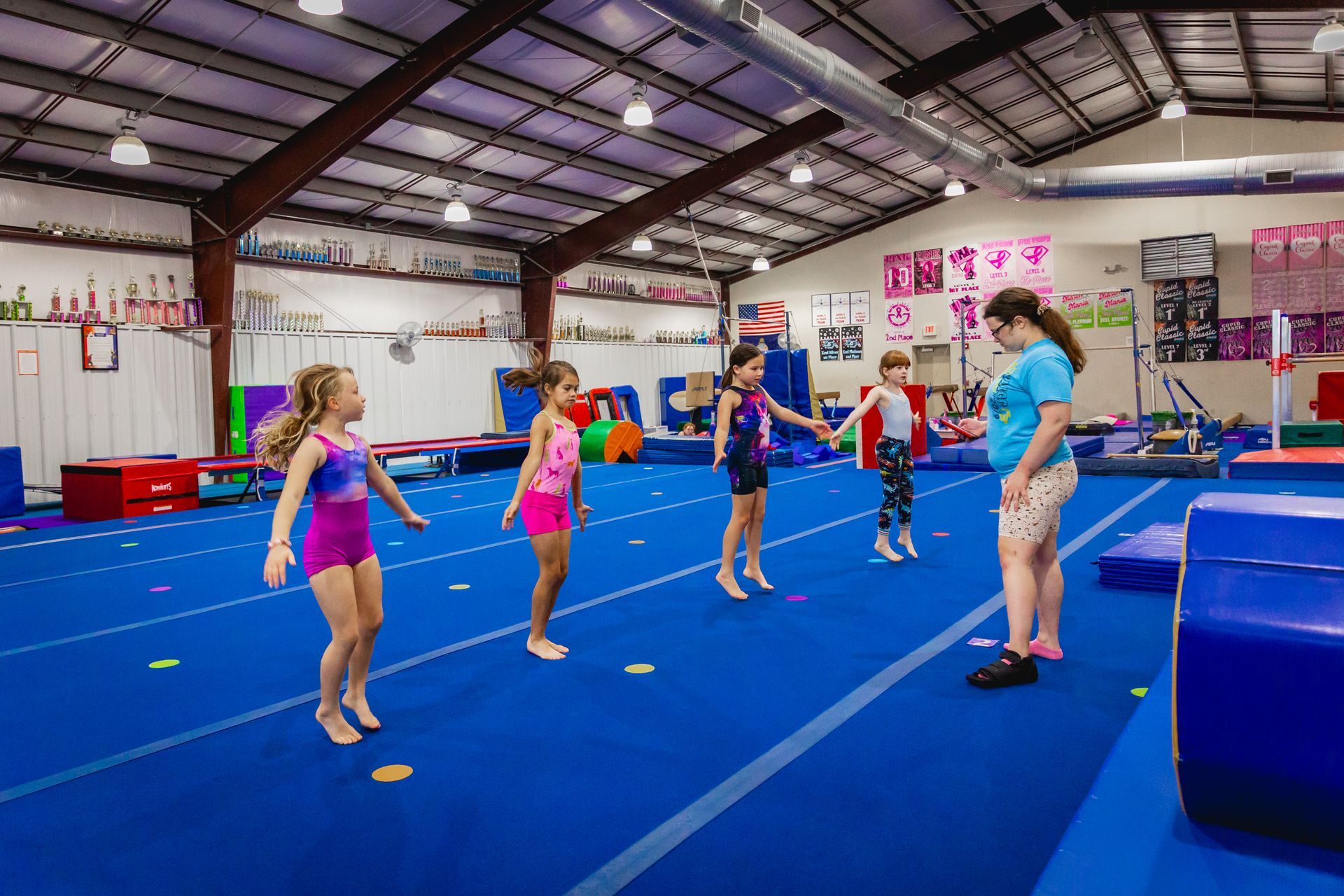
- Schedule regular activities — like weekly dance, gymnastics, or ninja classes — where children can set goals, practice skills, and celebrate achievements.
- Encourage reflection: after each session, talk about what went well, what was challenging, and what they’d like to try next.
- Support friendships and peer interactions within these activities, helping children develop social skills alongside resilience.
Structured routines and meaningful connections give children a reliable foundation from which to face challenges and thrive.
Why This Matters — Long-Term Benefits
The Columbia study highlights that positive, nurturing relationships can protect children from long-term mental health risks, even in the face of adversity. Children who experience these supportive connections develop emotional regulation, self-esteem, and coping strategies that last into adulthood.
When resilience is intentionally cultivated through relationships, challenges, problem-solving, healthy risks, and structured routines, children grow into confident, adaptable adults ready to handle life’s obstacles.
Bringing It All Together
- Build strong, nurturing bonds to provide a secure base for exploration.
- Teach problem-solving skills to encourage independence and critical thinking.
- Offer age-appropriate challenges that promote perseverance and confidence.
- Support healthy risk-taking to teach courage and adaptability.
- Maintain structured routines and social connections to reinforce stability and growth.
Learn More
Pinnacle in 3-D: Coaching, Development, and Success